Tuesday, April 19, 2011
Vera Wang's David's Bridal Bridesmaid Collection: A First Look
Vera Wang and David's Bridal seem to be a match made in sartorial heaven.
Just several months after the designer debuted her White wedding dress collection for the chain store, she has released the first image from the accompanying bridal collection, Women's Wear Daily reports. A set of seven dresses will be offered in hues like amethyst, orchid and champagne come June, with price points from $158 to $200.
WWD writes:
So, what's next in this happy marriage? Shoes! A series of four styles by Vera will be shelved in David's Bridal for summer.
Take a first look at Vera Wang's bridesmaid dresses for David's Bridal:

Just several months after the designer debuted her White wedding dress collection for the chain store, she has released the first image from the accompanying bridal collection, Women's Wear Daily reports. A set of seven dresses will be offered in hues like amethyst, orchid and champagne come June, with price points from $158 to $200.
WWD writes:
A one-shoulder short dress with a bubble skirt adorned with oversize rosettes is geared for style-minded wedding parties. But there are also more traditional choices such as a short dress with horizontal pleats and a sleeveless chiffon column dress with swag skirt.There's also long skirts -- "I never thought we would see that come back but it has," Wang told the fashion newspaper.
So, what's next in this happy marriage? Shoes! A series of four styles by Vera will be shelved in David's Bridal for summer.
Take a first look at Vera Wang's bridesmaid dresses for David's Bridal:
Gilt MANual Minute: Matching Your Sunglasses to Your Face
Here is a common problem, I would think, most men face when purchasing the right pair of shades for their face. Josh and Tyler, along with a shot of whiskey, explain what you can do to fix it.
Gilt MANual Minute: Matching Your Sunglasses to Your Face from Gilt MAN on Vimeo.
Monday, April 18, 2011
The Fiat 500 Gucci by Lapo Elkann
With his best Parisian accent Lapo describes the collaboration between Gucci and Fiat Group. The end result is quite dope.
javascript:void(0)
javascript:void(0)
Friday, April 15, 2011
Galliano Booted From His Own Label
According to a WWD article, there are some companies who have expressed interest in purchasing the label, including some of its licensing partners. However, it is looking like at the moment no effort has been made to put the John Galliano label on the block and supposedly the in-house design team continues to produce and a pre-Spring collection is in the works, which, how weird will that be sans Galliano? And given that he was fired basically for being the poster child for anti-Semitism is there any hope of rehabilitating a label named after him?
The image above was taken at the Spring 2011 runway show for John Galliano. By the time of his Autumn 2011 show in early March, the axe had fallen and Galliano was absent from a salon presentation of what would be his final collection for the label. Via Style.
Wednesday, April 13, 2011
Made in Rochester | Hickey Freeman
via A Continuous Lean
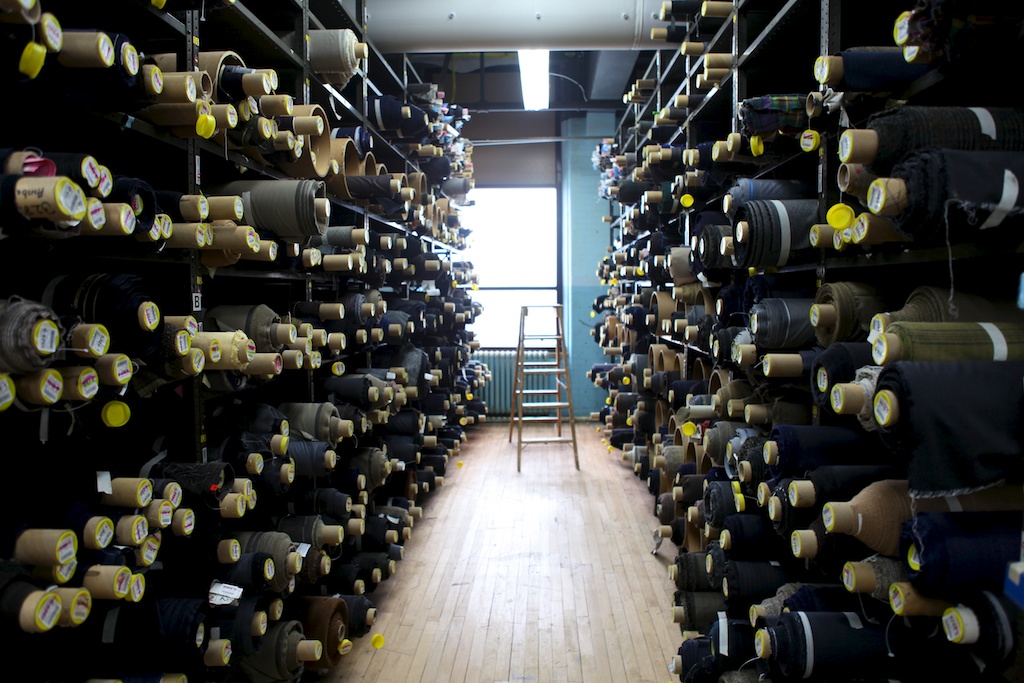
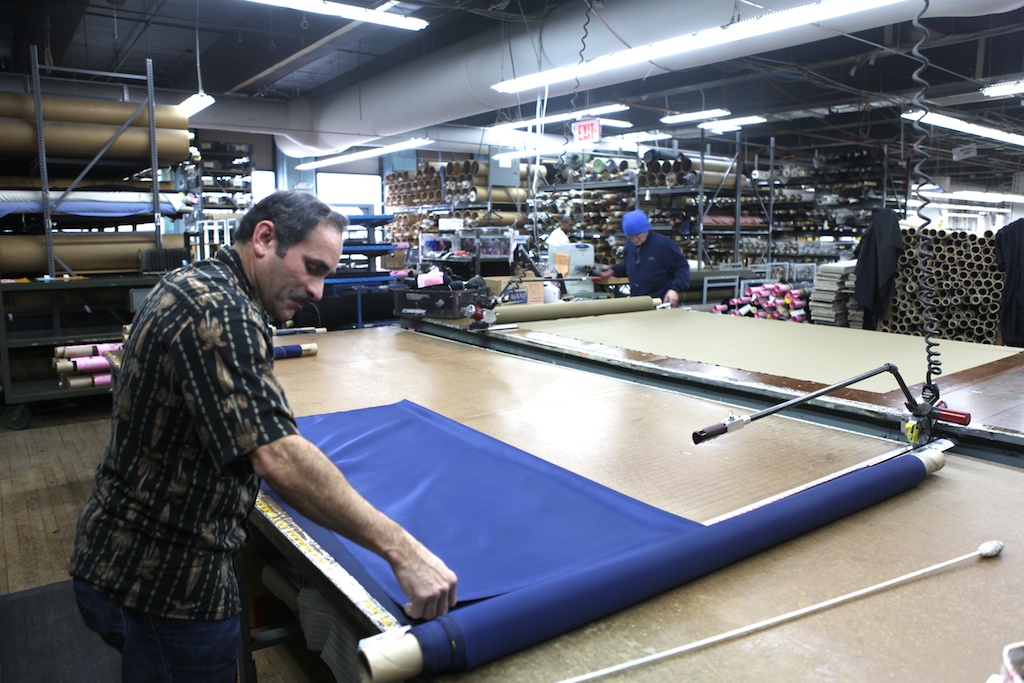
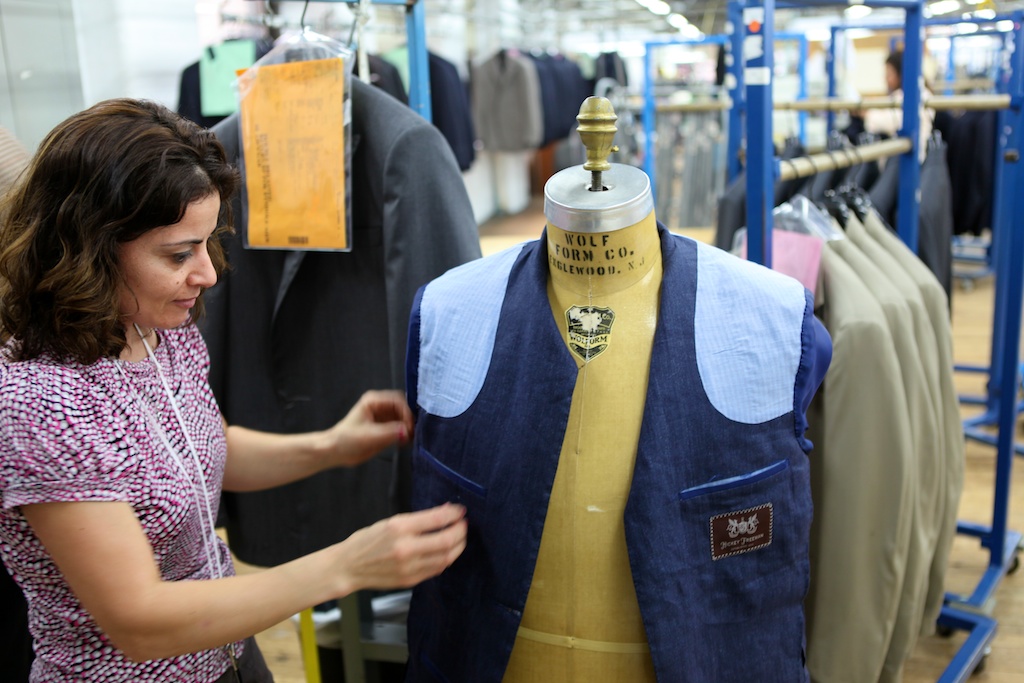
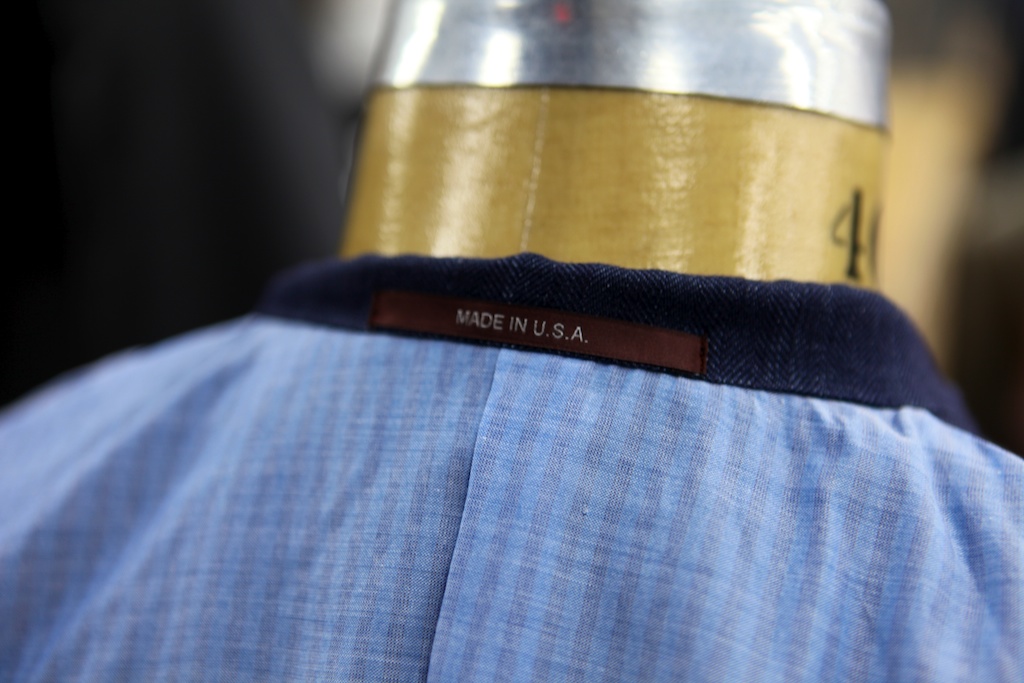
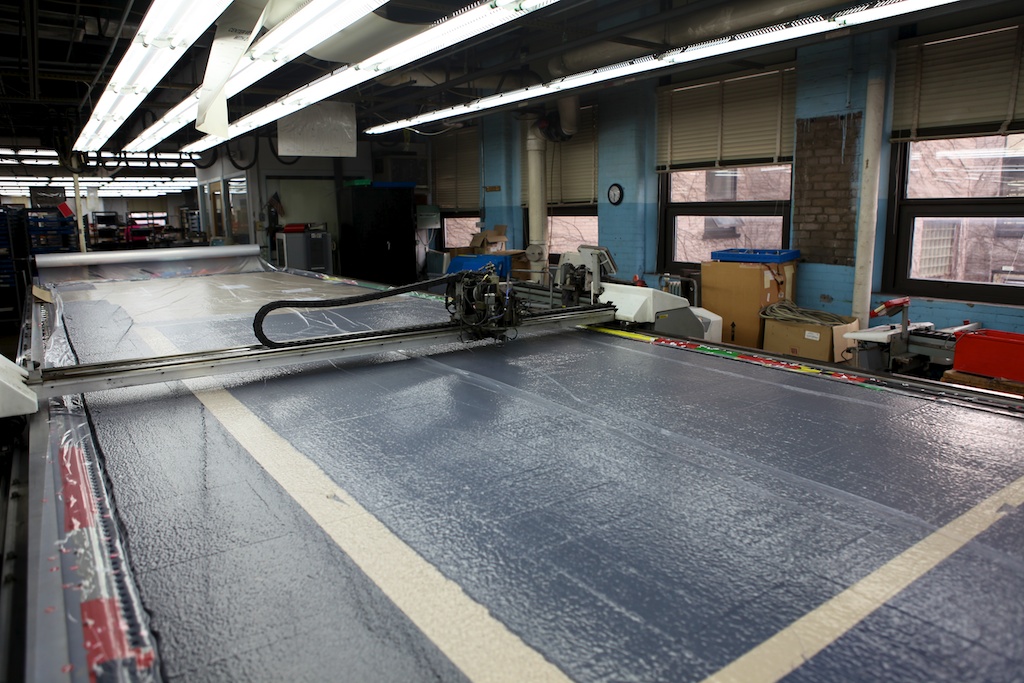
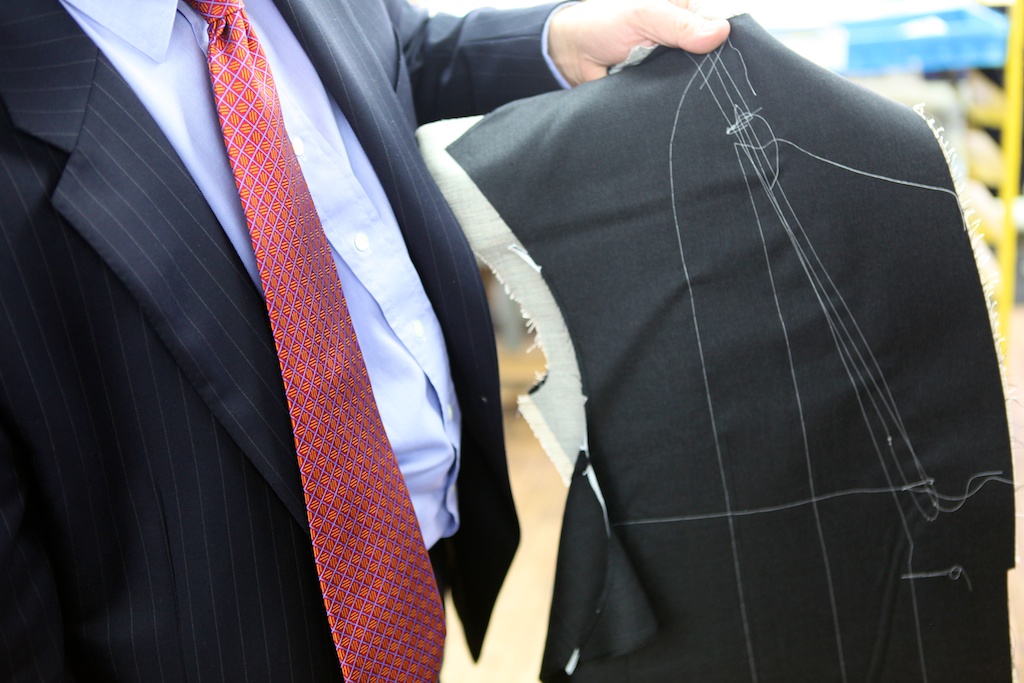
Home to corporate juggernauts like Kodak and Xerox, Rochester, New York has a rich industrial history. In addition to some of America’s largest companies, the city is also quietly home to Hickey Freeman, one of the country’s oldest and last surviving (and arguably one of the best) clothiers. Founded in 1899 by Jeremiah Hickey and Jacob Freeman, the company is still at it, making suits in their sprawling 77,000 square foot factory in Rochester. Having been to several other clothing factories in the U.S., I have been interested in paying a visit to Hickey Freeman for the past several years. I wanted to see firsthand the quality of the Hickey Freeman full canvas construction. Needless to say, when I finally got the opportunity to see the operation I was not disappointed.
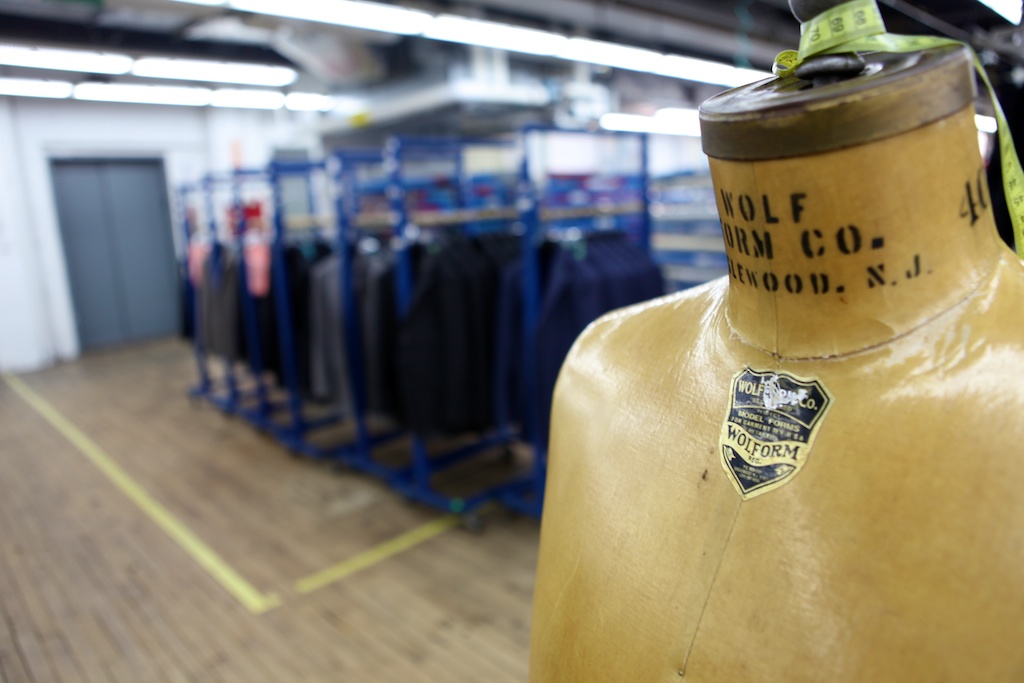
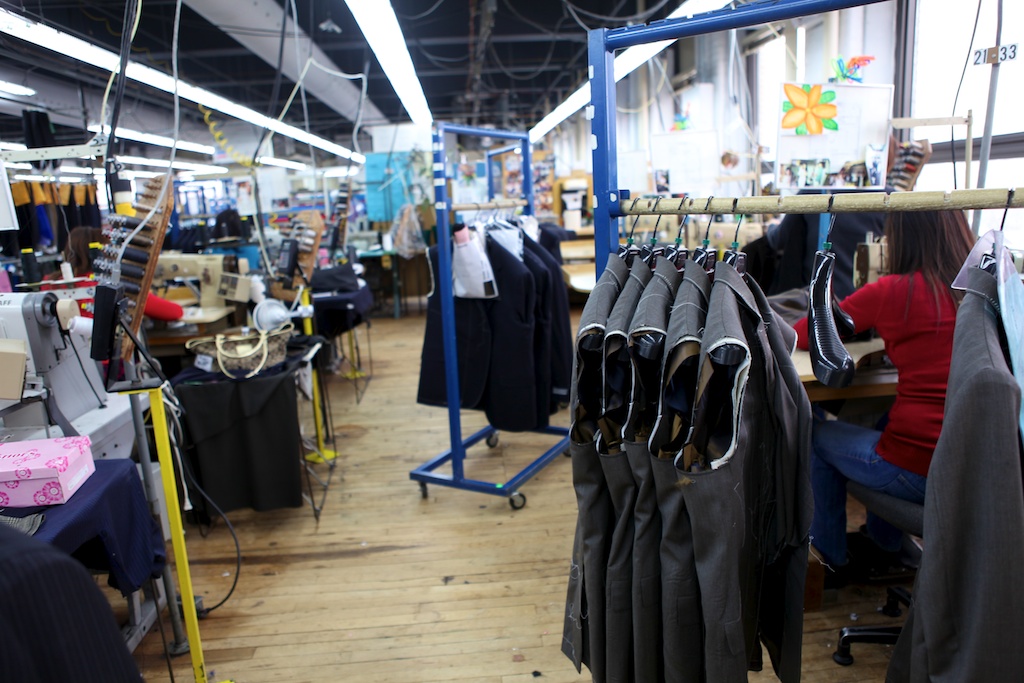
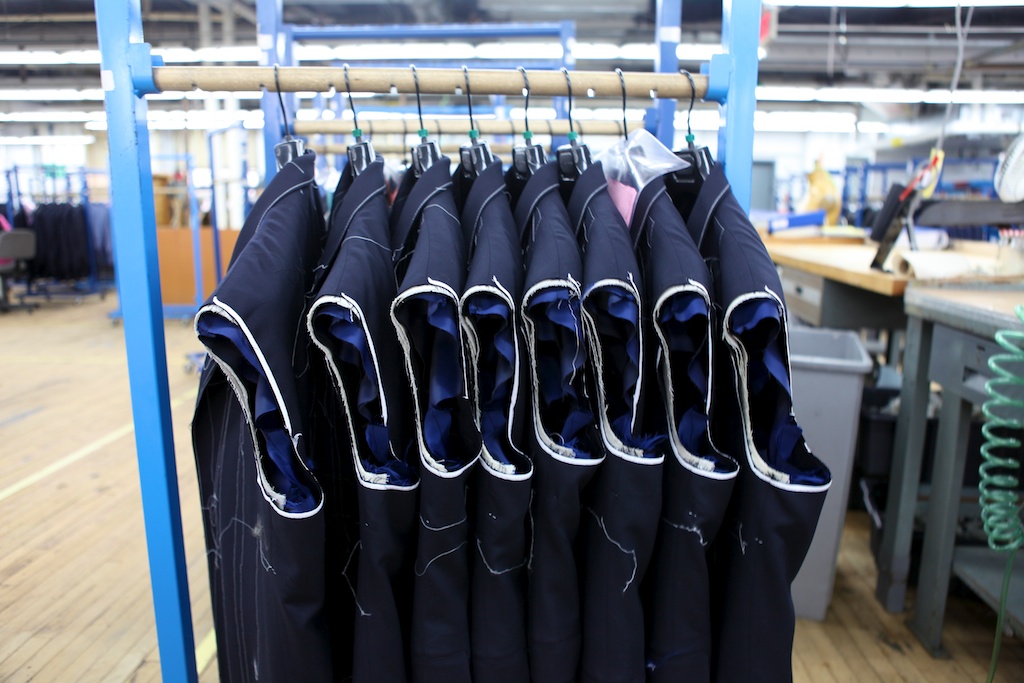
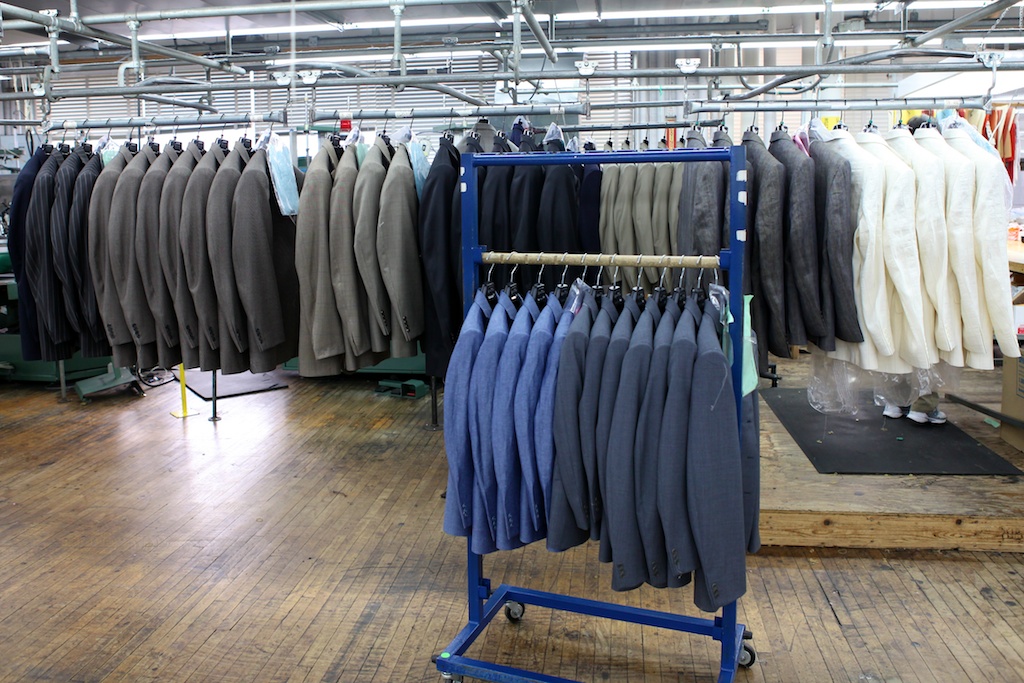
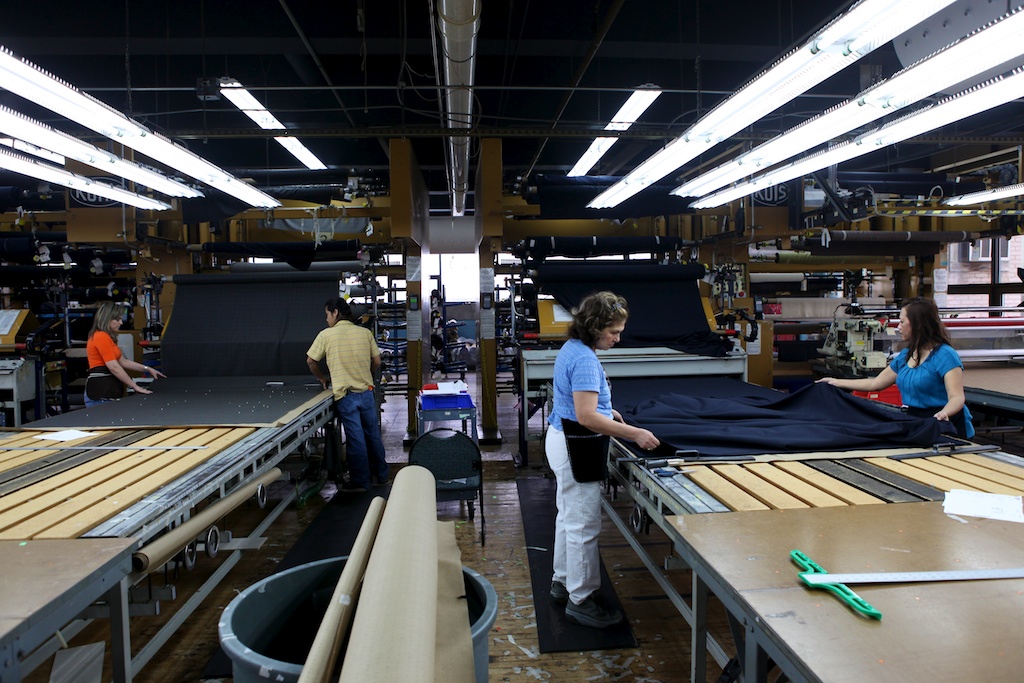
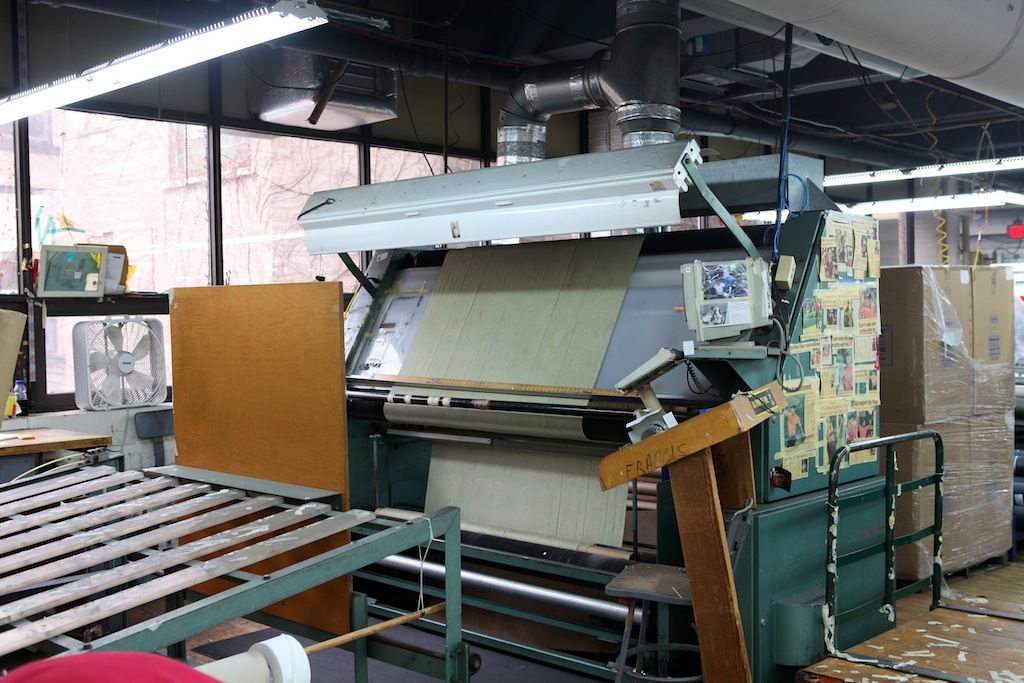
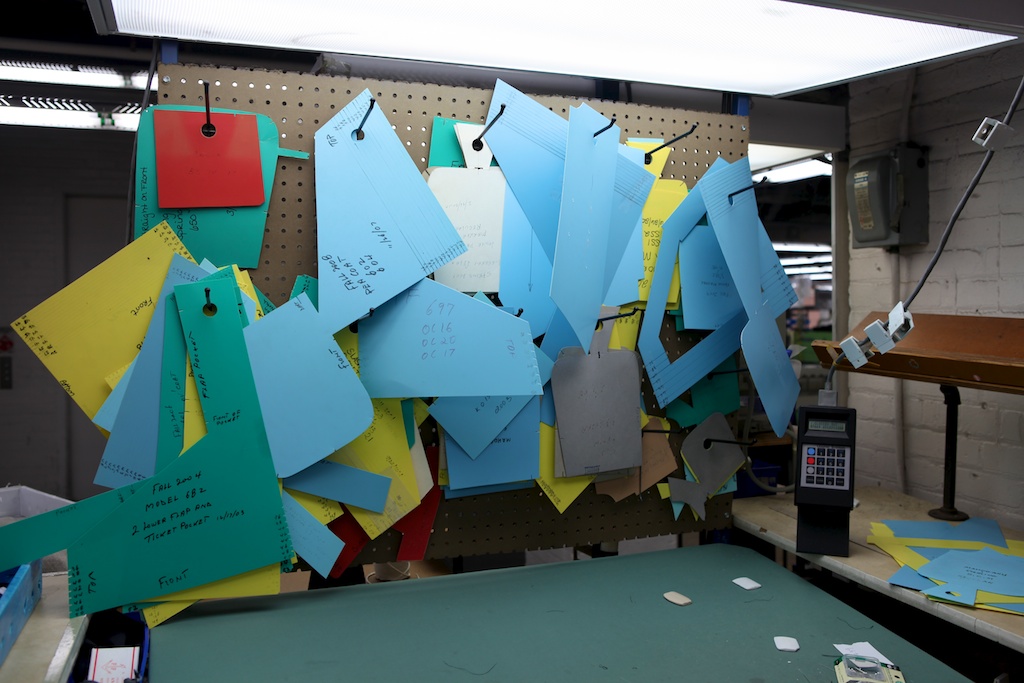
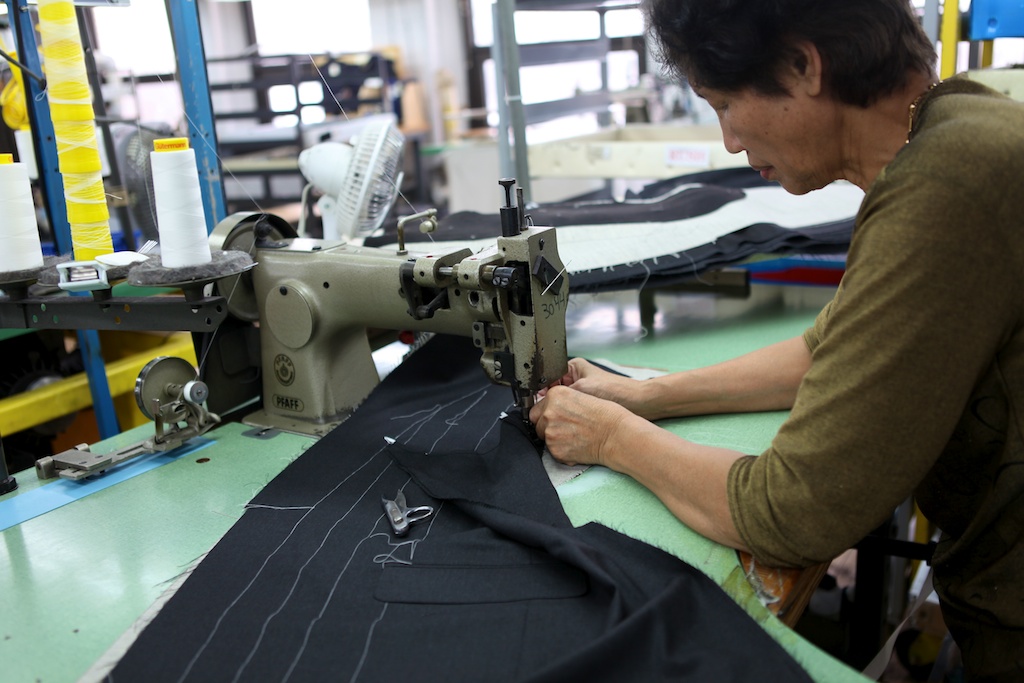
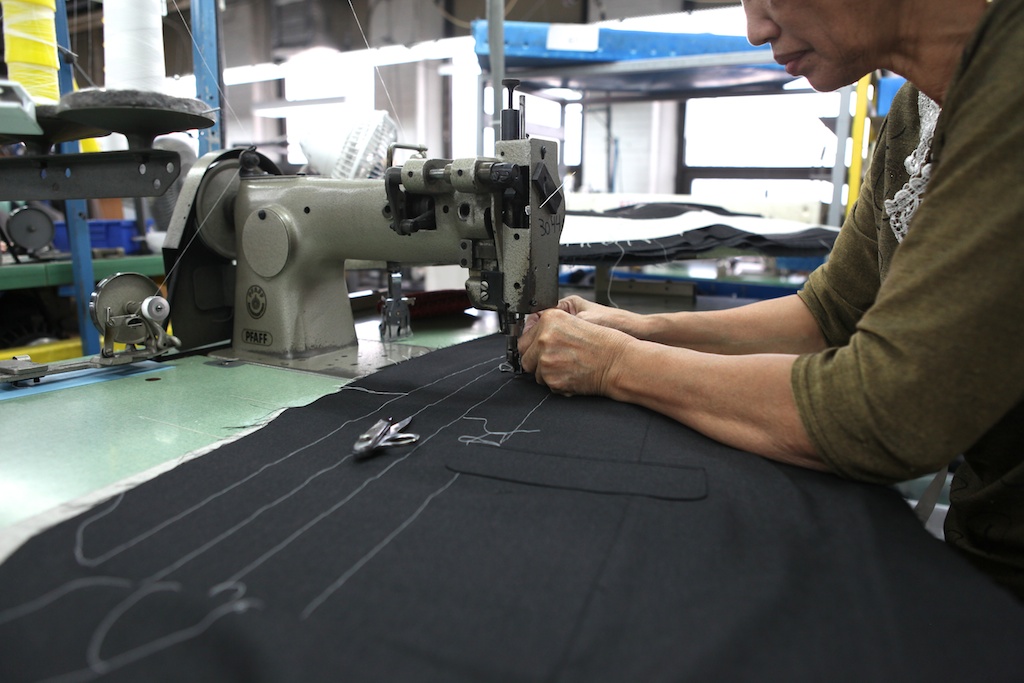
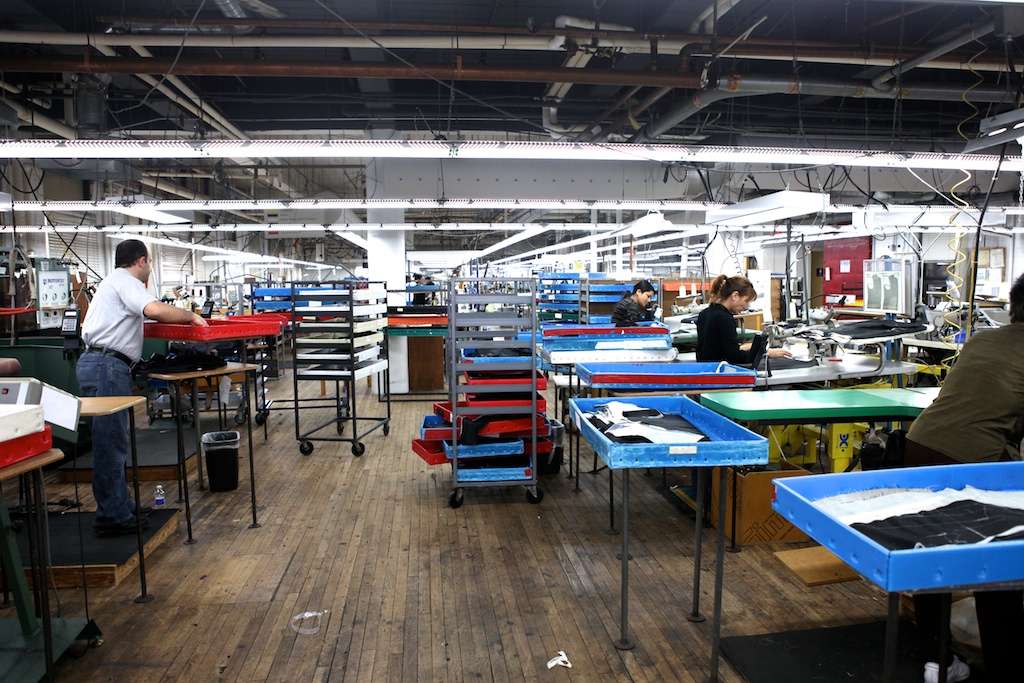
The factory in Rochester ranks up there as one of the most well organized I have ever seen. Wait, I should clarify that last statement a little bit. Hickey Freeman’s plant is one of the most well organized clothing factories that I have come across in the U.S. Allen Edmonds also has a pretty amazing production facility in Wisconsin that I have toured. There aren’t a lot of clothing companies still operating in the U.S., which is why it is interesting to see how advanced the Hickey Freeman process and facilities are. Everything is clean, well organized and modern. And all of this in the same building the company was founded in. Pretty amazing if you ask me. All of the garments move through the production line on special trays that the company has produced especially for its needs. In most clothing factories pieces and parts are bundled. You will notice in the photos that special care is given at every step to preserve the desired shape of the clothing as it snakes its way through the process. This example just illustrates the care and attention that goes into making a Hickey Freeman suit.
Another thing that stood out to me about the factory is the diversity of the work force, something that is also unrivaled at any facility I have been to previously. The plant manager told me they have workers from 17 different countries under one roof. It literally is the closest thing to a melting pot that I have ever seen working together. And everyone is working toward one common goal, to make fine tailored goods.


In the past few years Hickey Freeman has gone through a bit of a reorganization and was taken over by a new ownership group. Through that process the company has taken on three very skilled stewards in Doug Williams, Joseph Abboud and Mike Cohen to help lead the brand. I would think it would be tough to find three better people to run an American clothing company. Williams as the CEO of HMX Group (Hickey Freeman’s reorganized parent company), Abboud as group creative director and Cohen as Hickey Freeman president.
I have spent some time with Mike Cohen and he could be the best dressed guy in the game. In addition to being painfully nice and in possession of a much evolved sense of style, Mike can literally construct an entire suit by hand. Now that’s not something many executives can say. Cohen also understands the ins and outs of what is happening in menswear at the moment. Mike is the type of guy you want to go out drinking with and talk shop. The simple way to say this is that: Mike gets it.
All of this adds up to a return to the classic style and expert construction that gave Hickey Freeman the reputation it has today. To see HMX Group revitalize and re-brand the company should be pleasing for anyone interested in wearing a quality American made suit.
The photos below are pretty extensive, but there was so much to see in Rochester that I couldn’t resist sharing all of these with you.


Home to corporate juggernauts like Kodak and Xerox, Rochester, New York has a rich industrial history. In addition to some of America’s largest companies, the city is also quietly home to Hickey Freeman, one of the country’s oldest and last surviving (and arguably one of the best) clothiers. Founded in 1899 by Jeremiah Hickey and Jacob Freeman, the company is still at it, making suits in their sprawling 77,000 square foot factory in Rochester. Having been to several other clothing factories in the U.S., I have been interested in paying a visit to Hickey Freeman for the past several years. I wanted to see firsthand the quality of the Hickey Freeman full canvas construction. Needless to say, when I finally got the opportunity to see the operation I was not disappointed.
The factory in Rochester ranks up there as one of the most well organized I have ever seen. Wait, I should clarify that last statement a little bit. Hickey Freeman’s plant is one of the most well organized clothing factories that I have come across in the U.S. Allen Edmonds also has a pretty amazing production facility in Wisconsin that I have toured. There aren’t a lot of clothing companies still operating in the U.S., which is why it is interesting to see how advanced the Hickey Freeman process and facilities are. Everything is clean, well organized and modern. And all of this in the same building the company was founded in. Pretty amazing if you ask me. All of the garments move through the production line on special trays that the company has produced especially for its needs. In most clothing factories pieces and parts are bundled. You will notice in the photos that special care is given at every step to preserve the desired shape of the clothing as it snakes its way through the process. This example just illustrates the care and attention that goes into making a Hickey Freeman suit.
Another thing that stood out to me about the factory is the diversity of the work force, something that is also unrivaled at any facility I have been to previously. The plant manager told me they have workers from 17 different countries under one roof. It literally is the closest thing to a melting pot that I have ever seen working together. And everyone is working toward one common goal, to make fine tailored goods.
In the past few years Hickey Freeman has gone through a bit of a reorganization and was taken over by a new ownership group. Through that process the company has taken on three very skilled stewards in Doug Williams, Joseph Abboud and Mike Cohen to help lead the brand. I would think it would be tough to find three better people to run an American clothing company. Williams as the CEO of HMX Group (Hickey Freeman’s reorganized parent company), Abboud as group creative director and Cohen as Hickey Freeman president.
I have spent some time with Mike Cohen and he could be the best dressed guy in the game. In addition to being painfully nice and in possession of a much evolved sense of style, Mike can literally construct an entire suit by hand. Now that’s not something many executives can say. Cohen also understands the ins and outs of what is happening in menswear at the moment. Mike is the type of guy you want to go out drinking with and talk shop. The simple way to say this is that: Mike gets it.
All of this adds up to a return to the classic style and expert construction that gave Hickey Freeman the reputation it has today. To see HMX Group revitalize and re-brand the company should be pleasing for anyone interested in wearing a quality American made suit.
The photos below are pretty extensive, but there was so much to see in Rochester that I couldn’t resist sharing all of these with you.
The Devil In Miss Jones
January Jones, the star of X-Men: First Class, on mutants, Mad Men, and facing the paparazzi.
January Jones covers the new issue of W Magazine, opening up about her rise from being a model to TV actress to movie star. She originally auditioned for the role of barrier breaking, career-focused Peggy -- the role went to Elisabeth Moss -- and instead, series creator Matthew Weiner created a role for her.

Although she was named after January Wayne, the prototypical Seventies heroine of Jacqueline Susann’s Once Is Not Enough, January Jones projects the cool but complicated leading ladies (Deneuve!) of the Sixties: gorgeous but mysterious. Beauty has its own undeniable power, and the 33-year-old Jones uses her looks to seduce and agitate. Her portrayal of Betty Draper on Mad Men, the ultimate trophy housewife, is complex and disturbing. Betty could have been just a lovely, lonely clotheshorse with social aspirations, but Jones imbues the character with a mix of barely stifled rage and longing. Similarly, Emma Frost, Jones’s character in X-Men: First Class, is much darker than her pure-white ensembles. Frost can read minds and transform into a diamond: a diabolical and alluring combination. “Emma Frost was not in the earlier X-Men movies, so I wanted to make her true to the way she is in the comic books. I’m one of the most powerful mutants,” Jones said, laughing. “It’s fun to imagine what life would be like as a diamond.”
Lynn Hirschberg: Despite the fact that you are perfectly cast as the chilly, gorgeous WASP-ish housewife Betty Draper on Mad Men, you originally auditioned for the part of ambitious plain-Jane Peggy, the lapsed Catholic career gal.
January Jones: There was no Betty in the pilot when I auditioned. Matthew Weiner, the creator of the show, had no intention of showing Don Draper’s home life. I read for Peggy two times—it was between me and Elisabeth Moss, who eventually got the part. At the end of the scene, there was a casual mention that Don was married. Matt went home that night and wrote two scenes that featured Betty. I auditioned a couple of days later, and he made me a verbal promise that the character would grow. I took the part on faith—there was no script or fleshed-out character or Betty plotline.
Do you like Betty? She’s superficial, strange, and often mean, and yet fascinating.
I don’t judge Betty or necessarily understand her. The audience is passionate about her. After season one they wanted her to speak out against Don and his infidelities. Then in season two, when she did, there was a huge reaction against Betty. They want her to talk—just not too much.
Like Betty, you started out as a model. You left South Dakota at 18 for New York City. Were you nervous?
Not really. I was excited to be independent, but I was also naive—I just wanted to be rich and famous [Laughs]. I lived in an apartment near the Empire State Building. There were a billion girls in New York City who wanted to be models. After a while I was immune to rejection, which helped when I went out to L.A. to become an actress. In modeling, the criteria is purely aesthetic. So when I got to L.A., I didn’t care if they said I was too small, too blonde, too pretty, or not pretty enough.
You often seem to be cast as a villain—Betty Draper has a scary mean streak, and in X-Men: First Class [out June 3], you play Emma Frost, aka Diamond Girl.
It’s a huge responsibility! [Laughs] And I’m a villain. As Emma Frost I’m telepathic, and I can turn into a diamond, which means I’m very, very cold. I always wear white: lots of iridescent stretch leather, lots of sparkle, and ass-kicking white boots.
You will get a zillion marriage proposals at Comic-Con.
Great! That’s perfect! Comic-Con is mostly male, and I don’t really have that audience. And I’m really like a guy in a lot of ways. My screen saver is a picture of me with Eli and Peyton Manning taken at the Kentucky Derby. The most starstruck I get is around football players. I like the Pittsburgh Steelers—I was going to be Troy Polamalu for Halloween.
The free-spirited, wild-haired Super Bowl champion?!
Yes, but I told too many people I was going to be Troy, so I ended up going as Yves Saint Laurent. I didn’t do nude Yves Saint Laurent, although I love that picture. Instead, I slicked back my hair and put on glasses. I wore a tux with a bow tie. Unfortunately, people don’t know Yves Saint Laurent, and they thought I was the guy in the Six Flags commercial.
A lot of people—men and women!—probably went as Betty Draper for Halloween.
Who knows? But because of the clothes, I understand. It’s strange, but when the season ends I miss wearing all Betty’s underpinnings. I love long-line bras and girdles. There’s a sexiness about girdles—on Mad Men I wear them four months out of the year, and I see my body changing. When you wear a girdle, you can’t bend in the usual way. Your thighs are cinched together, which makes your stride shorter. You automatically get a wiggle in your walk. It’s sexy.
When you’re out of costume, do you get recognized?
Yes. The paparazzi are lining my street, waiting for me to come out of the house. And I’m always doing the same thing: walking the dog. My poor dog is getting to know all the photographers. I say to him, “Why aren’t you barking?! These aren’t your friends.”
January Jones covers the new issue of W Magazine, opening up about her rise from being a model to TV actress to movie star. She originally auditioned for the role of barrier breaking, career-focused Peggy -- the role went to Elisabeth Moss -- and instead, series creator Matthew Weiner created a role for her.
Although she was named after January Wayne, the prototypical Seventies heroine of Jacqueline Susann’s Once Is Not Enough, January Jones projects the cool but complicated leading ladies (Deneuve!) of the Sixties: gorgeous but mysterious. Beauty has its own undeniable power, and the 33-year-old Jones uses her looks to seduce and agitate. Her portrayal of Betty Draper on Mad Men, the ultimate trophy housewife, is complex and disturbing. Betty could have been just a lovely, lonely clotheshorse with social aspirations, but Jones imbues the character with a mix of barely stifled rage and longing. Similarly, Emma Frost, Jones’s character in X-Men: First Class, is much darker than her pure-white ensembles. Frost can read minds and transform into a diamond: a diabolical and alluring combination. “Emma Frost was not in the earlier X-Men movies, so I wanted to make her true to the way she is in the comic books. I’m one of the most powerful mutants,” Jones said, laughing. “It’s fun to imagine what life would be like as a diamond.”
Lynn Hirschberg: Despite the fact that you are perfectly cast as the chilly, gorgeous WASP-ish housewife Betty Draper on Mad Men, you originally auditioned for the part of ambitious plain-Jane Peggy, the lapsed Catholic career gal.
January Jones: There was no Betty in the pilot when I auditioned. Matthew Weiner, the creator of the show, had no intention of showing Don Draper’s home life. I read for Peggy two times—it was between me and Elisabeth Moss, who eventually got the part. At the end of the scene, there was a casual mention that Don was married. Matt went home that night and wrote two scenes that featured Betty. I auditioned a couple of days later, and he made me a verbal promise that the character would grow. I took the part on faith—there was no script or fleshed-out character or Betty plotline.
Do you like Betty? She’s superficial, strange, and often mean, and yet fascinating.
I don’t judge Betty or necessarily understand her. The audience is passionate about her. After season one they wanted her to speak out against Don and his infidelities. Then in season two, when she did, there was a huge reaction against Betty. They want her to talk—just not too much.
Like Betty, you started out as a model. You left South Dakota at 18 for New York City. Were you nervous?
Not really. I was excited to be independent, but I was also naive—I just wanted to be rich and famous [Laughs]. I lived in an apartment near the Empire State Building. There were a billion girls in New York City who wanted to be models. After a while I was immune to rejection, which helped when I went out to L.A. to become an actress. In modeling, the criteria is purely aesthetic. So when I got to L.A., I didn’t care if they said I was too small, too blonde, too pretty, or not pretty enough.
You often seem to be cast as a villain—Betty Draper has a scary mean streak, and in X-Men: First Class [out June 3], you play Emma Frost, aka Diamond Girl.
It’s a huge responsibility! [Laughs] And I’m a villain. As Emma Frost I’m telepathic, and I can turn into a diamond, which means I’m very, very cold. I always wear white: lots of iridescent stretch leather, lots of sparkle, and ass-kicking white boots.
You will get a zillion marriage proposals at Comic-Con.
Great! That’s perfect! Comic-Con is mostly male, and I don’t really have that audience. And I’m really like a guy in a lot of ways. My screen saver is a picture of me with Eli and Peyton Manning taken at the Kentucky Derby. The most starstruck I get is around football players. I like the Pittsburgh Steelers—I was going to be Troy Polamalu for Halloween.
The free-spirited, wild-haired Super Bowl champion?!
Yes, but I told too many people I was going to be Troy, so I ended up going as Yves Saint Laurent. I didn’t do nude Yves Saint Laurent, although I love that picture. Instead, I slicked back my hair and put on glasses. I wore a tux with a bow tie. Unfortunately, people don’t know Yves Saint Laurent, and they thought I was the guy in the Six Flags commercial.
A lot of people—men and women!—probably went as Betty Draper for Halloween.
Who knows? But because of the clothes, I understand. It’s strange, but when the season ends I miss wearing all Betty’s underpinnings. I love long-line bras and girdles. There’s a sexiness about girdles—on Mad Men I wear them four months out of the year, and I see my body changing. When you wear a girdle, you can’t bend in the usual way. Your thighs are cinched together, which makes your stride shorter. You automatically get a wiggle in your walk. It’s sexy.
When you’re out of costume, do you get recognized?
Yes. The paparazzi are lining my street, waiting for me to come out of the house. And I’m always doing the same thing: walking the dog. My poor dog is getting to know all the photographers. I say to him, “Why aren’t you barking?! These aren’t your friends.”
Subscribe to:
Posts (Atom)